

 © Shutterstock
Overview
The Brahmaputra Landscape extends across the floodplains of Assam to the Eastern Himalayan foothills of Arunachal Pradesh in the north, encompassing major tributaries of the Brahmaputra River. Covering approximately 65,000 square kilometres, it includes forests, grasslands and wetlands, interspersed with human settlements, farmlands and tea plantations. It supports approximately 250 tigers, 2,800 greater one-horned rhinos, 7,500 elephants, 650 Ganges river dolphins, 800 species of birds, and a diverse array of amphibians, reptiles, invertebrates and plants—many of them endemic to the landscape. The Brahmaputra River is the lifeline of this region, sustaining the lives and livelihoods of over 40 million people and nurturing rich biodiversity.
The Brahmaputra Landscape is among India's most climate-vulnerable regions. According to the CEEW Climate Vulnerability Index (2021), 15 of the country’s 25 most climate-vulnerable districts are located in Assam. Almost every year, the region experiences severe flooding, resulting in significant loss of human life and wildlife, and widespread disruption to livelihoods.
The landscape is increasingly threatened by deforestation, habitat fragmentation, and degradation caused by human-driven pressures. These impacts have further complicated species recovery, movement and human–wildlife interactions. Despite notable conservation successes—such as the recovery of rhino and tiger populations and the identification of elephant corridors—major challenges persist for the dispersal and regional migration of wide-ranging species, including tigers, elephants and rhinos.
Rapid loss of forest cover has driven wildlife to seek refuge and food in tea plantations and agricultural fields, intensifying negative human-wildlife interactions and elevating the risk of zoonotic disease transmission.
The Brahmaputra Landscape is among India's most climate-vulnerable regions. According to the CEEW Climate Vulnerability Index (2021), 15 of the country’s 25 most climate-vulnerable districts are located in Assam. Almost every year, the region experiences severe flooding, resulting in significant loss of human life and wildlife, and widespread disruption to livelihoods.
The landscape is increasingly threatened by deforestation, habitat fragmentation, and degradation caused by human-driven pressures. These impacts have further complicated species recovery, movement and human–wildlife interactions. Despite notable conservation successes—such as the recovery of rhino and tiger populations and the identification of elephant corridors—major challenges persist for the dispersal and regional migration of wide-ranging species, including tigers, elephants and rhinos.
Rapid loss of forest cover has driven wildlife to seek refuge and food in tea plantations and agricultural fields, intensifying negative human-wildlife interactions and elevating the risk of zoonotic disease transmission.
 © WWF-India
OUR WORK – BRAHMAPUTRA LANDSCAPE
WWF-India focuses on securing the populations of key terrestrial and aquatic species and sustaining their habitats by restoring functional connectivity through corridors and securing critical forest areas, rivers and wetlands to sustain and enhance ecosystem services. WWF-India works to manage the impact of human–elephant conflict, reduce the risk of disease transmission to wildlife, and raise awareness to combat illegal wildlife trade. Efforts are being made to enhance the climate resilience of people and ecosystems.
Read More 
KEY PILLARS OF OUR WORK:
- WWF-India has worked with the forest department to restore critical wildlife areas, securing habitats for the greater one-horned rhino, Asian elephant and tiger in Assam. These efforts have contributed to the successful re-establishment of the rhino population in Manas National Park, where the species had been extirpated in the late 1990s. The rhino population in Manas has since increased to 45 individuals.
- The monitoring activities undertaken as part of this initiative also led to the first-time documentation of several species in new and extended habitats. These species included the Bengal florican, gharial, clouded leopard, spotted linsang, fishing cat, yellow-throated marten, Asiatic golden cat and white-eared night heron. This documentation provided valuable insights that will inform further scientific studies.
- WWF-India has collaborated with the Assam Forest Department and the National Highways Authority of India (NHAI) to help design and construct elephant-friendly underpasses and culverts along NH27 in the Lumding Reserve Forest section of the Dhansiri–Lungding Elephant Reserve.
- WWF-India is also working with the Indian Railways to identify key wildlife movement zones so that mitigation measures can be implemented for the proposed Kokrajhar–Gelephu railway and roadway corridor linking Assam in India with Gelephu in Bhutan.
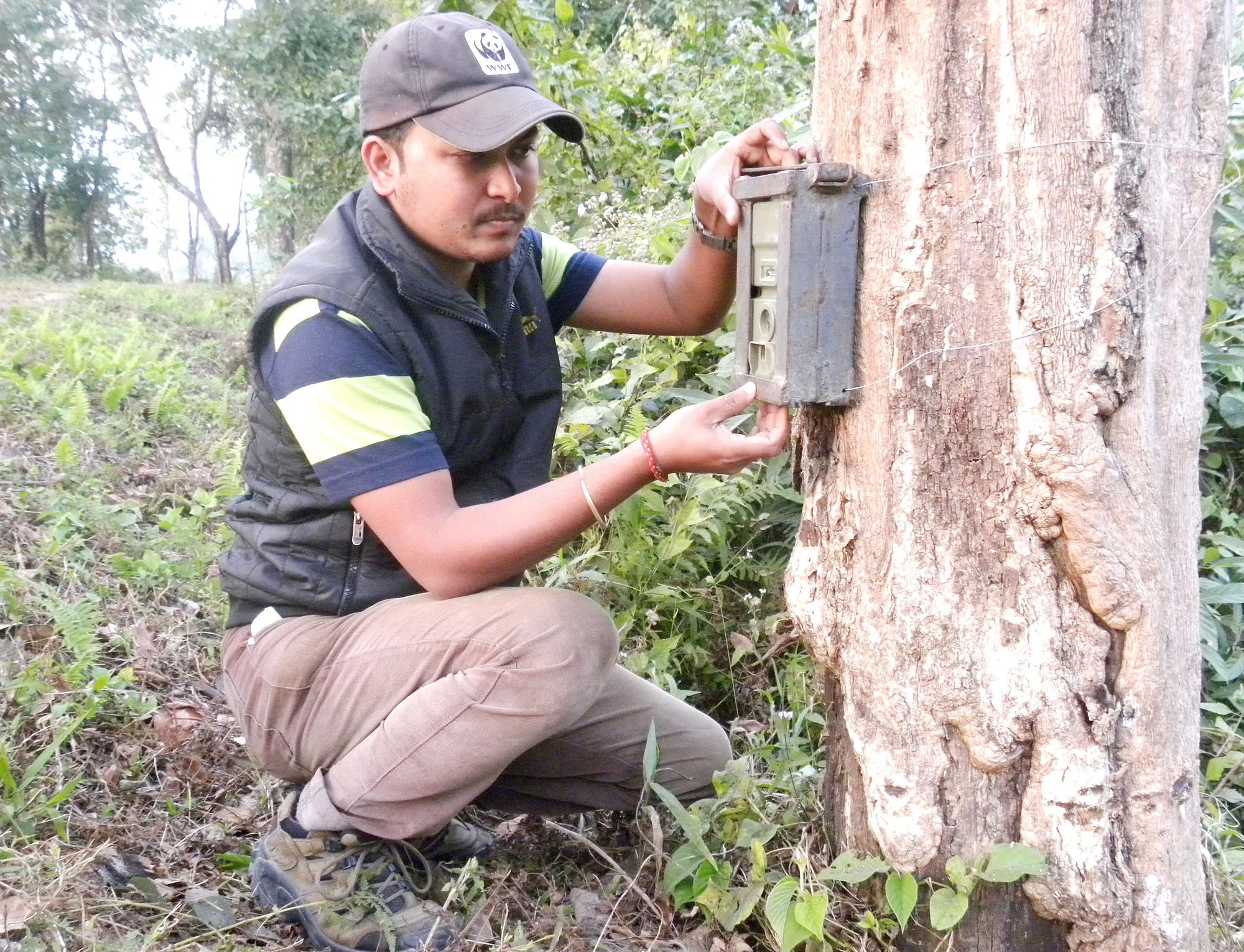
- The functionality of wildlife corridors in the Kaziranga-Karbi Anglong complex has been monitored by community volunteers and WWF-India staff since 2011 through camera-trapping exercises.
- WWF-India has helped establish evidence-based human-elephant conflict prevention measures and response systems to reduce casualties. More than 5,500 hectares of agricultural land across 280 villages has been protected from crop depredation by wild elephants through sustainable, community-inclusive strategies, such as community-based anti-depredation squads and low-cost power fences, benefiting about 35,000 people.
- WWF-India has also undertaken technology-based interventions, such as satellite radio-collars and AI-equipped trail cameras, to monitor elephants and support conservation planning.
- WWF-India has been implementing the Interim Relief Scheme (IRS) since 2018 to support people affected by carnivore conflict in the Brahmaputra landscape. Over the last eight years, a total sum of over INR 27 lakh has been provided as interim relief to 1,029 families.
- WWF-India has helped establish nine community conserved areas (CCAs) covering almost 140 square kilometres in Karbi Anglong. Over 1,000 families in the Kaziranga-Karbi Anglong complex are benefiting from conservation-linked livelihoods, including eco-tourism and other non-farm-based activities.
- WWF-India is supporting the Assam Forest Department and the veterinary department in developing a disease surveillance system under the One Health approach. This effort includes livestock vaccination in villages on the fringes of priority protected areas, and other activities aimed at preventing the transmission of diseases between livestock and wildlife. This, in turn, reduces the probability of zoonotic disease transmission.
 © shutterstock.com
Support Conservation
Your contribution helps us in protecting wildlife, restoring habitats and building a better future for people and nature.
Donate